


Your orders depend on a shared system.
Your team uses an online system to receive orders and coordinate deliveries.
CYBERCHECK · CYBER RESILIENCE FOR SMEs
Understand how security gaps could affect your SME—and what to review next.
CyberCheck connects your business context, systems and attack scenarios in one cyber-risk assessment workflow.
Register interest in early access and pilots. Opens Google Forms.
CYBERCHECK / EXPOSURE MODEL
Scroll the diagram to explore all five zones.
Connecting cybersecurity research,
business understanding and ecosystem expertise.
WHY CYBERCHECK
You know your business depends on technology. But do you know where it may be exposed?
Disconnected technical findings can make it hard to see what matters to day-to-day operations. CyberCheck brings business context and potential cyber exposure into the same conversation, so you can make better-informed choices.
YOUR BUSINESS, CONNECTED
Choose a familiar situation to explore. These are illustrative examples, not customer cases or assessment findings.
Your team uses an online system to receive orders and coordinate deliveries.
Unauthorised access could delay orders, change delivery details or expose customer information.
Review account access, sign-in protection and a fallback process if the system becomes unavailable.
Sales and support staff rely on a shared drive or application for contact details and service history.
Overly broad permissions or an old account could give someone access to information they no longer need.
Review sharing settings, inactive accounts and how access is removed when staff or suppliers leave.
An external provider uses remote access to maintain software and support your team.
A compromised supplier account could provide a route into systems your daily operations depend on.
Review permissions, sign-in protection and how supplier access can be monitored or disabled during an incident.
CyberCheck brings these dependencies and possible attack scenarios into one assessment workflow. Findings still need review and business judgement.
Explore the assessment workflowINSIDE THE PLATFORM
Follow the CyberCheck workflow.
Select a stage to take a closer look.
Use Left and Right Arrow to move between stages, then Enter or Space to select one. Home and End move to the first and last stage.
Bring together information about your business, its operations and public footprint. Review the context so the assessment starts from a more accurate picture.
Join the CyberCheck waitlist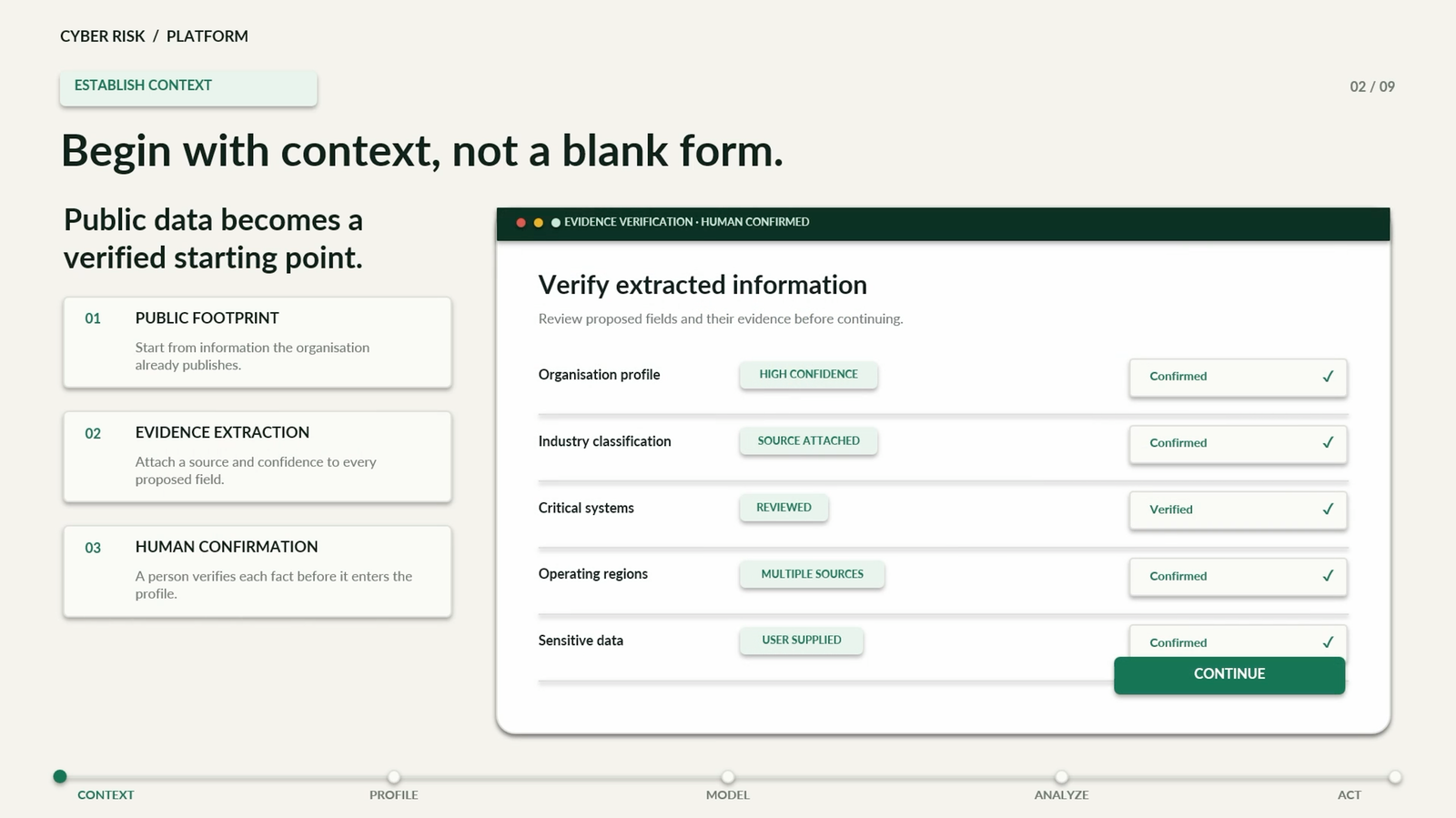
Capture important systems, dependencies, sensitive information and existing controls in a structured cyber profile.
Join the CyberCheck waitlist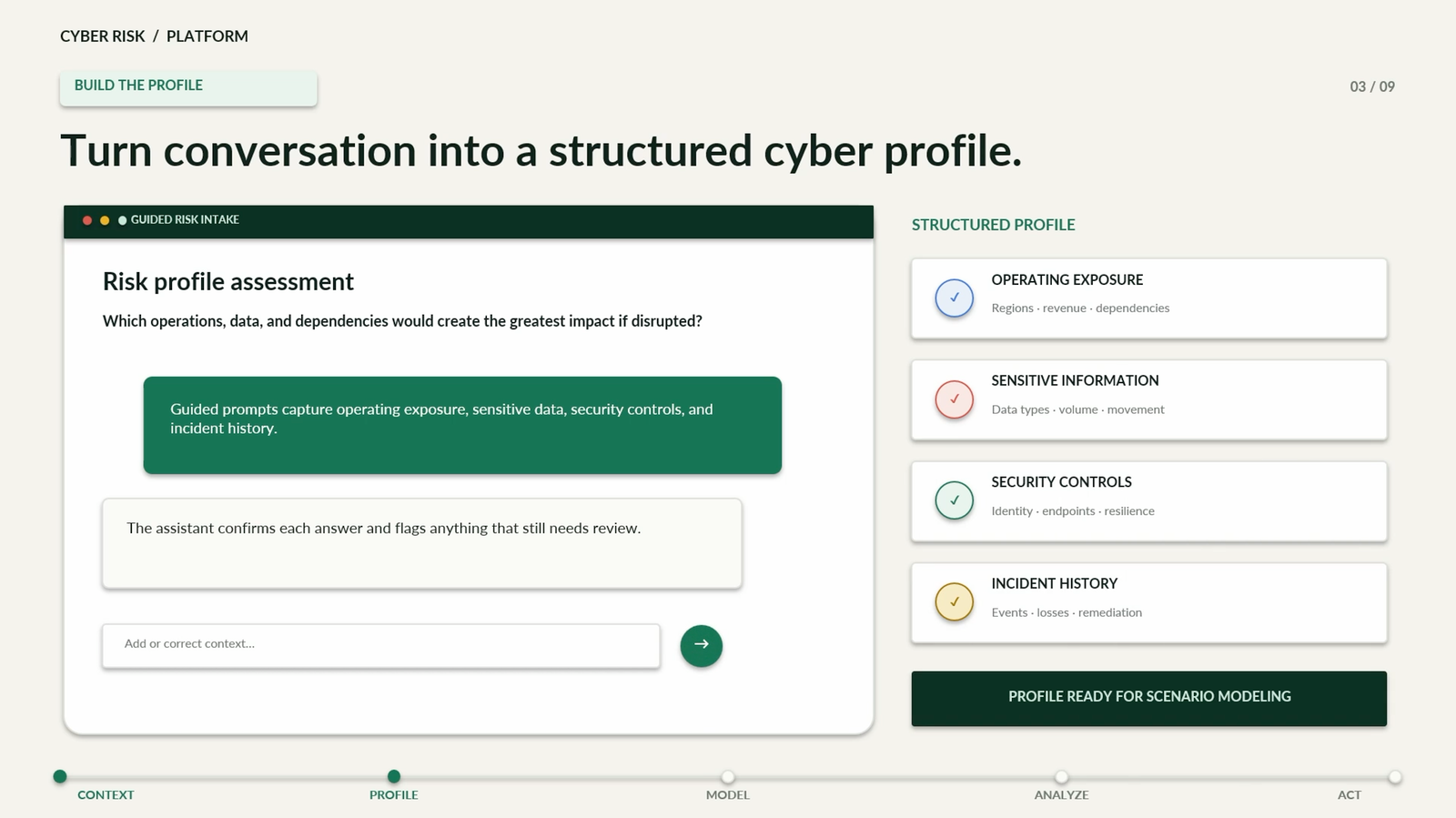
Use AI-assisted scenario modelling to represent systems and connections. Review the scenario before moving into analysis.
Join the CyberCheck waitlist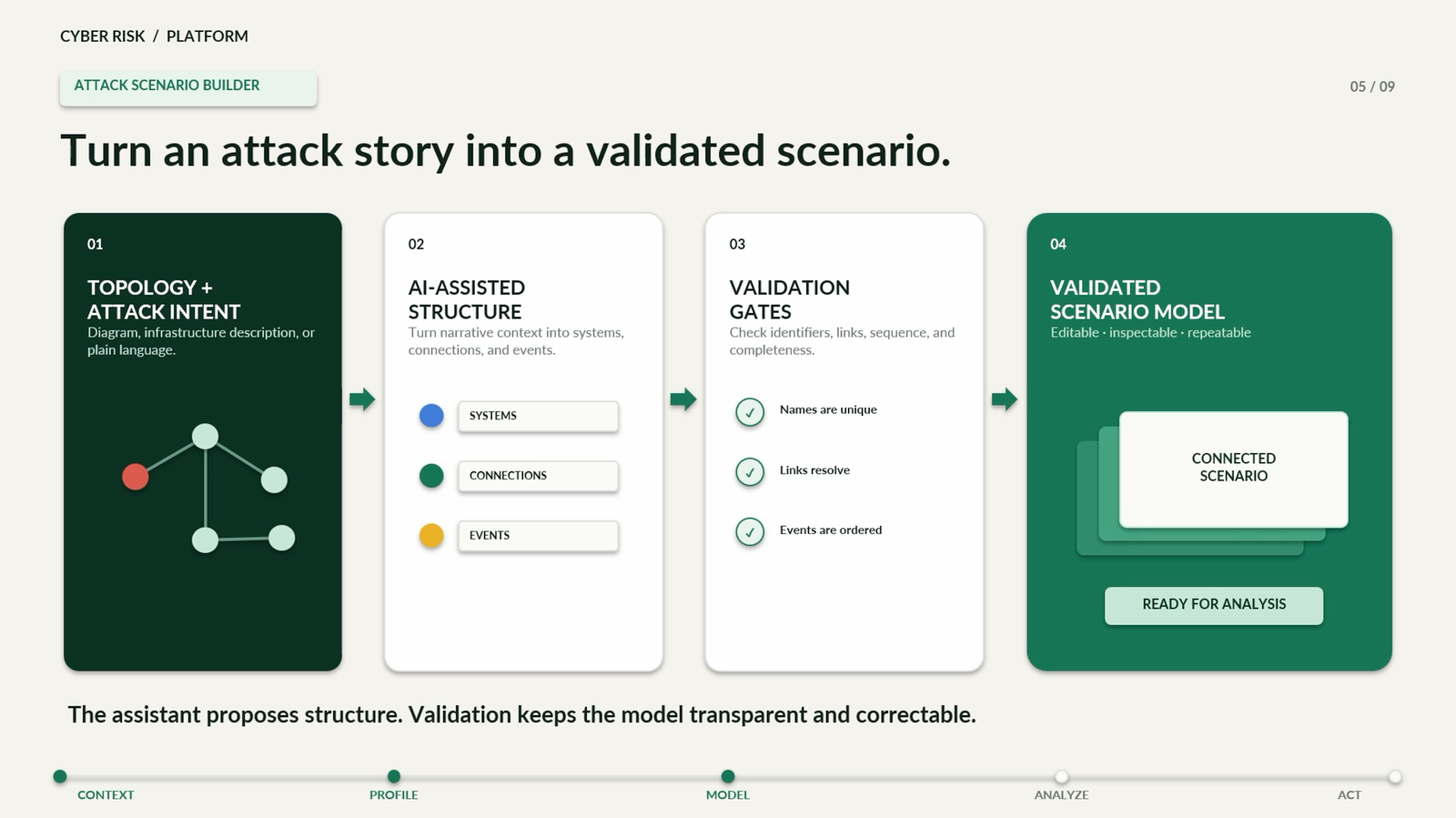
Explore possible attack paths and areas of exposure. Consider weaknesses, reachability and business impact together.
Join the CyberCheck waitlist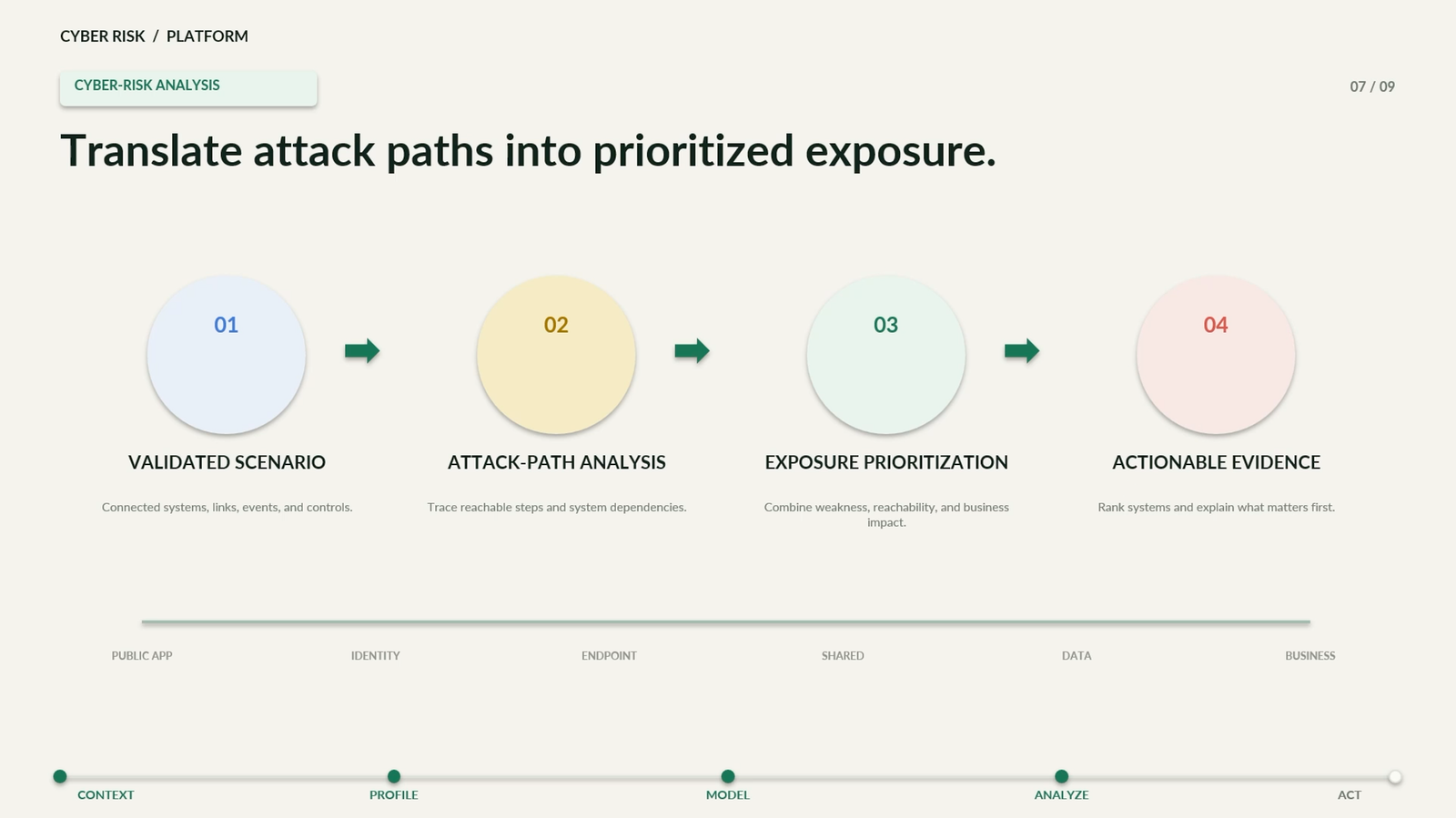
Use the findings to discuss protection priorities. Your organisation’s context, resources and judgement remain central to the next decision.
Join the CyberCheck waitlist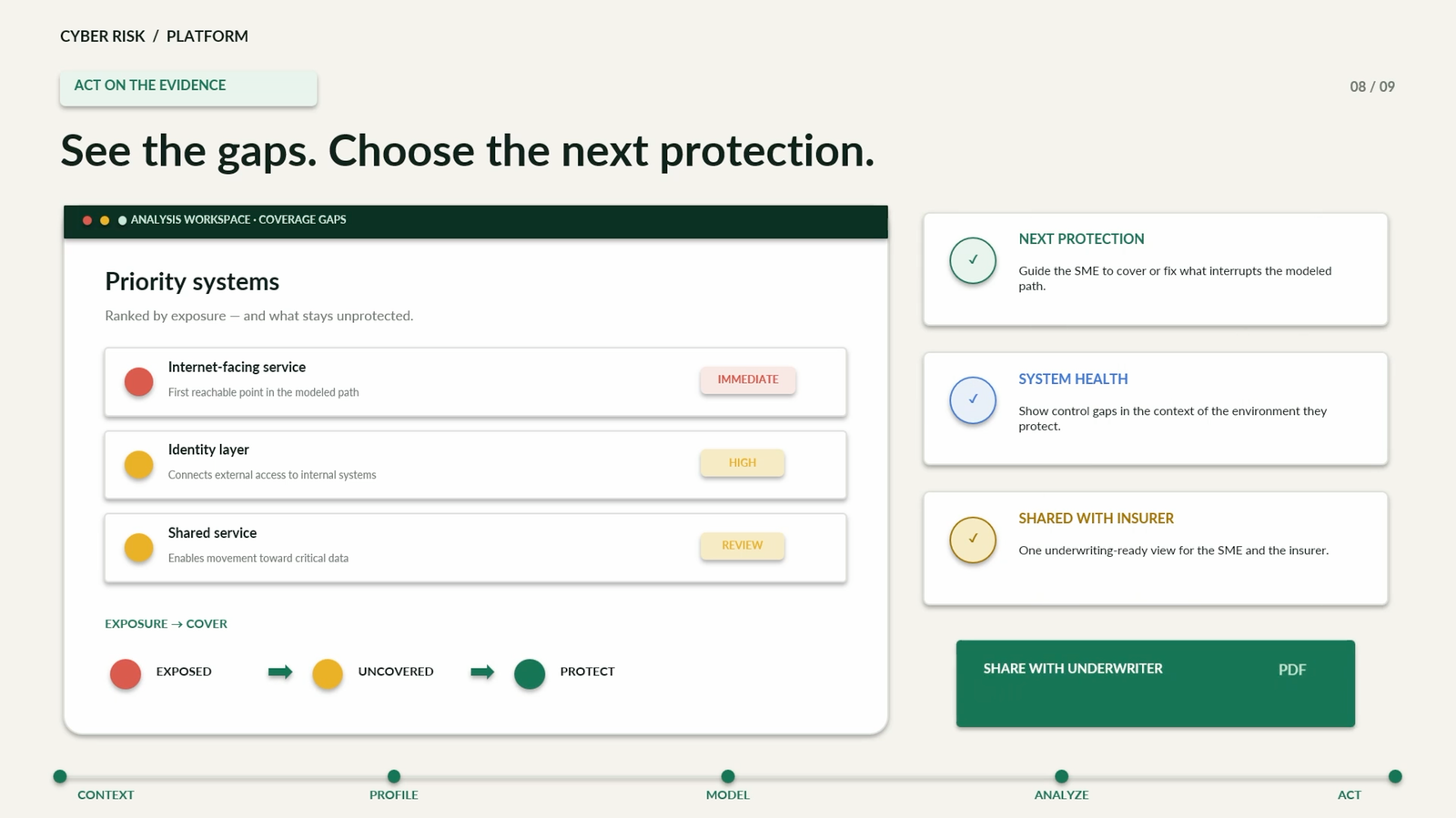
A model supports a decision. Findings depend on the information and scenarios assessed; review and business judgement remain essential.
WATCH THE WALKTHROUGH
Prefer a guided introduction? Watch the workflow in the platform demonstration, or read the walkthrough below.
Interested? Join the waitlist →CyberCheck platform walkthrough 2 min 25 sec · Play when ready
The video illustrates the workflow; it is not a live assessment.
GET INVOLVED
SMEs are at the heart of the project. Technology providers,
SME networks, researchers and insurers can contribute too.
Join the waitlist for updates on early access, pilot opportunities and future demonstrations. Explore how CyberCheck could help you understand your business’s exposure and protection priorities.
Join the CyberCheck waitlistParticipation details are being finalised. Registering interest does not guarantee access or an assessment.
Get to know the platform and the questions it helps you ask.
Register your interest in early access, pilots and future demonstrations.
Tell us what is clear, what is relevant and what needs to improve.
We welcome cybersecurity providers, cloud and IT specialists, business chambers, SME associations, researchers and community organisations interested in supporting SME cyber resilience.
Email about a partnershipExplore complementary tools, mitigation approaches and ways to make findings useful.
Discuss awareness sessions and participation through business and sector networks.
Explore pilot collaboration, education and shared learning with the initiative.
We welcome insurers, reinsurers and risk specialists interested in discussing assessment methodology, business exposure and potential research or pilot collaboration.
Discuss insurer collaborationThis is a collaboration invitation, not an insurance offer. Participation does not authorise sharing an SME’s assessment data with an insurer.
Discuss the methodology, assumptions and limitations behind the assessment.
Identify where cyber-risk understanding could support a research or pilot question.
Discuss data use and collaboration arrangements separately before any pilot.
A FEW THINGS TO KNOW
Have a question about CyberCheck?
Ask us on LinkedInOn our LinkedIn Page, select Message to ask a question. If it is unavailable, use email below. LinkedIn sign-in may be required.
Prefer email? Contact the teamCyberCheck is a cyber-risk platform designed for SMEs. It brings organisation context, cyber profiles and possible attack scenarios together to help surface potential gaps and inform protection priorities.
SMEs are the primary users. Technology providers, SME networks, research collaborators, insurers and risk specialists can explore separate collaboration routes in the initiative.
The workflow uses information about the organisation, its operations, important systems and dependencies, sensitive data, existing controls and relevant history. Organisation context and generated scenarios should be reviewed for accuracy.
No. Findings depend on the information and scenarios being assessed. Possible attack paths are modelled scenarios, and findings need to be interpreted in context. CyberCheck supports decisions; it does not replace technical judgement or guarantee complete coverage.
Join for updates on early access, pilot opportunities and future demonstrations. Participation arrangements are still being finalised; joining does not guarantee access or an assessment and is separate from creating a platform account.
The Google Form requires your work email, organisation name and acknowledgement of the stated data-use purposes. Name, job title, company website and industry are optional. Only the CyberCheck team can access your responses. Read the privacy notice in the form before submitting.
KEEP THE CONVERSATION GOING
Follow CyberCheck on LinkedIn for SME-focused perspectives, practical questions and updates from the project.
TAKE THE NEXT STEP
Get updates on early access, pilot opportunities and future demonstrations of CyberCheck.
Participation details are being finalised. Joining registers interest; it does not guarantee access or an assessment.
Register with your work email and organisation name, and acknowledge the form’s data-use purposes. Other profile questions are optional. Only the CyberCheck team can access your responses; the privacy notice is in the form.
Waitlist registration opens Google Forms.
Join the waitlist Looking for the application? Visit the platform